An industrial solar project begins with electricity records, operating constraints, and an inspection of the site—not with a choice of panels. By following each stage, you can judge whether a proposal fits your factory’s load, roof or yard, grid connection, production schedule, and handover needs.
Key takeaways
- Share electricity bills, load data, tariff details, and site records at enquiry.
- Check roof strength, shading, drainage, access, fire safety, and electrical hazards.
- Size the plant against daytime load, tariff structure, export limits, and grid rules.
- Demand test results, drawings, warranties, manuals, and an operating record at handover.
The First Enquiry Starts with Electricity and Site Records
Panel selection comes after the electricity audit. An industrial solar company in Jaipur needs enough operating and site data to match industrial solar solutions to actual consumption, grid limits, and the property’s condition—not simply to the monthly units on one bill.
1. Provide the latest 12 months of electricity bills, tariff category, sanctioned load, contract demand, maximum demand, power-factor records, and any demand penalties.
2. Share 15-minute interval load data for representative working days, along with operating hours, shift patterns, seasonal production changes, holidays, and planned shutdown periods. Monthly kWh alone can oversize a plant when daytime demand is low or highly variable.
3. State the objective clearly: reduce imported electricity, use solar behind the meter, provide backup through batteries, export surplus power, or evaluate open access. Each goal changes the system design and commercial calculation.
4. Submit the latest single-line diagram, transformer capacity and loading, main switchboard details, outage history, approved electrical drawings, and the location of existing meters and protection equipment.
5. Add roof or land ownership records, roof drawings, age and repair history, future expansion plans, and access restrictions for equipment delivery and maintenance.
These records let the installer compare rooftop, ground-mounted, storage, hybrid, or export-based arrangements before promising capacity. Missing demand data can produce surplus generation, nuisance trips, or a system that cannot connect to the factory’s electrical network.
The Solar Site Survey Tests Space, Structure, Safety, and Access
Before engineering begins, a solar site survey in Jaipur checks whether the proposed area can safely host equipment and connect it to the facility without disrupting operations. A satellite image cannot show roof strength, hidden cable obstacles, or interconnection limits.
1. Measure the roof, setbacks, parapet height, drainage paths, and usable mounting area. Record roof age, corrosion, waterproofing condition, and planned expansions. For open yards or car parks, map boundaries, soil conditions, shading, nearby buildings, trees, and future construction.
2. Have a structural engineer verify dead load, wind uplift, purlins or slab condition, attachment points, and corrosion. Agree in writing who handles roof leaks and waterproofing repairs, especially where mounting penetrations or cable entries are proposed.
3. Trace access for workers, materials, cranes, and maintenance vehicles. Check fire-tender routes, walkways, emergency clearances, water availability, shutdown areas, and safe locations for inverters, batteries, combiner boxes, and other equipment.
4. Inspect the transformer, main switchgear, earthing points, lightning protection, meter panels, and the point of common coupling. Mark cable routes, trench requirements, ventilation needs, and locations where cables could face heat, water, vehicle impact, or production hazards.
These findings determine whether an industrial solar installation in Jaipur belongs on the roof, ground, or another structure, and whether the proposed layout can be maintained safely. The survey report should include photographs, measurements, marked drawings, test observations, and unresolved risks—not just a panel count.
Engineering Matches System Size with Load, Tariff, and Grid Rules
A 100 kW plant is not automatically suitable because the roof can hold 100 kW. An industrial solar company in Jaipur compares connected load, sanctioned load, contract demand, 15-minute interval demand, operating hours, and monthly bills before fixing capacity.
A design based only on monthly kWh can overproduce during a factory’s low-load shift and send valuable energy to the grid.
The engineer overlays the hourly solar-generation curve on the facility’s load profile. That comparison determines whether the best arrangement is rooftop or ground-mounted solar, behind-the-meter storage, export-limited operation, or a larger structure using open access or captive consumption. Self-consumption usually delivers stronger value when daytime machinery demand is steady.
| Arrangement | Engineering question | Approval route |
|---|---|---|
| Rooftop, behind-the-meter | Can the roof, inverter capacity, and internal switchboard accept the output? | DISCOM connectivity and applicable electrical-safety approvals |
| Net or gross metering | Will exported units qualify under the current tariff and settlement rules? | DISCOM application, sanctioned agreement, meter inspection, and synchronization |
| Zero-export system | Must reverse power flow be prevented? | DISCOM interconnection review and approved export-control settings |
| Open access or captive | Does the project meet demand, ownership, and wheeling conditions? | DISCOM, SLDC, and other approvals required for the selected structure |
The application package normally includes the single-line diagram, protection settings, equipment datasheets, sanctioned-load records, structural clearance, and meter details. SOLSKEN ENERGY LLP should show these assumptions in the design note, so an industrial solar company installation process in Jaipur can be checked before procurement rather than corrected after energisation.
Related products
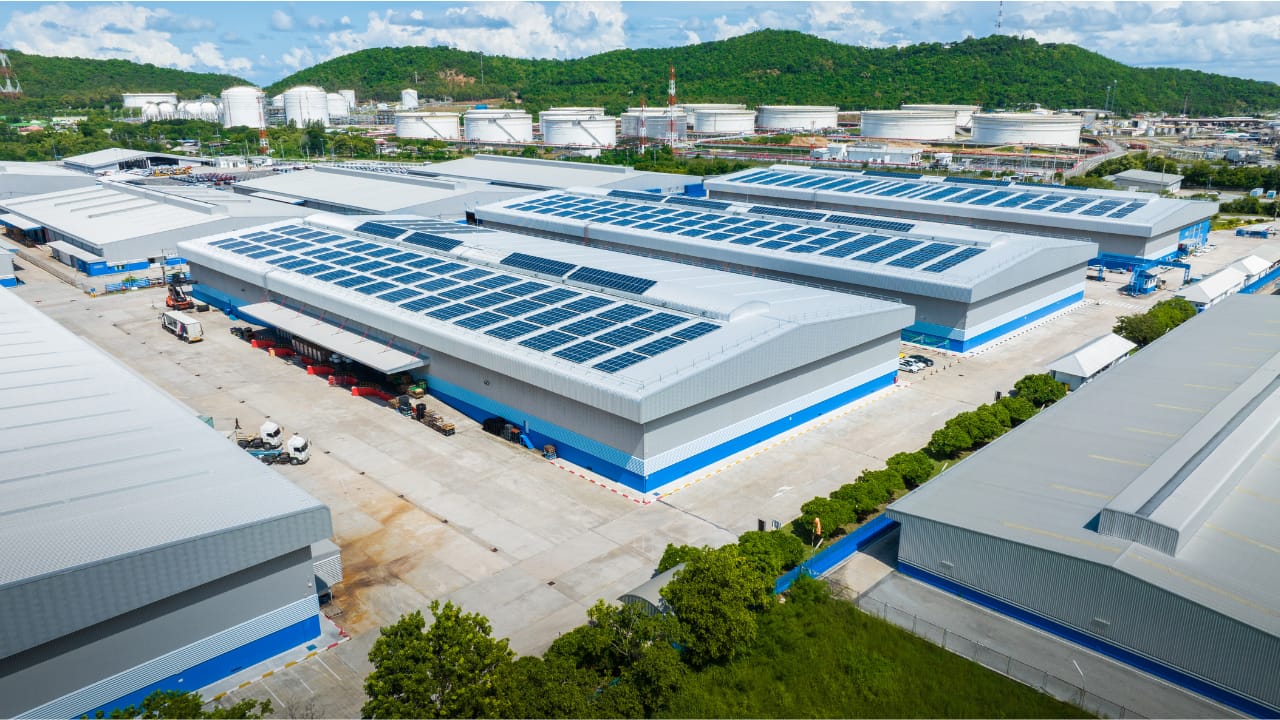 | Industrial Solar Solutions Industrial Solar Solutions Solsken Energy LLP provides comprehensive Industrial Solar Solutions designed to help factories, manufacturing units, warehouses, and large... |
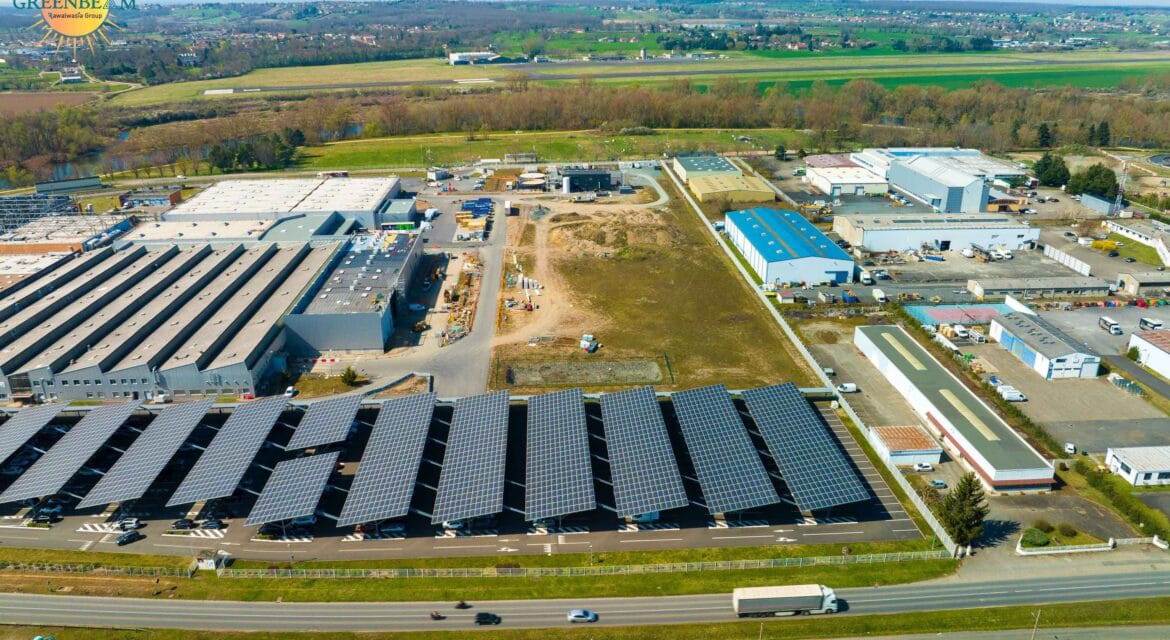 | Commercial Solar Installation Commercial Solar Installation Solsken Energy LLP offers professional Commercial Solar Installation services for offices, retail stores, hotels, hospitals, educational... |
Construction Takes Place Around Live Industrial Operations
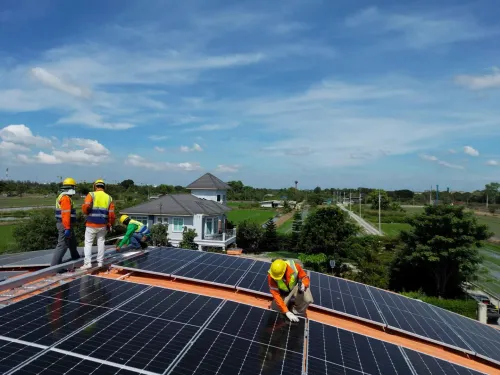
A live factory remains operational when construction is divided into controlled work zones, scheduled outages, and separately tested electrical sections. Barricades, warning signs, access control, and permit-to-work procedures keep workers and production staff apart, while a designated safety coordinator controls lifting, roof access, hot work, and isolation points.
- Deliver mounting steel, modules, inverters, cables, and protection equipment through an agreed route and lift them during low-traffic periods.
- Install the mounting structure after checking roof access, load limits, drainage, and safe walking paths.
- Fix modules, complete DC stringing, and label every string so faults can be traced without disturbing unrelated circuits.
- Install inverters, AC panels, isolators, earthing conductors, and lightning-protection equipment in spaces with required clearance and ventilation.
- Route cables on supported trays or conduits, seal roof penetrations, protect crossings, and keep cables away from heat, sharp edges, and moving equipment.
- Connect the solar plant to the existing switchboard only during an approved shutdown, after the isolation, lockout, and testing plan is signed off.
The contractor must agree shutdown dates with production, maintenance, and the electricity-supply team; nobody should modify a live industrial switchboard on assumption. Industrial solar solutions also need checks beyond panel output: loose DC connectors, undersized cables, water in junction boxes, blocked inverter vents, poor earthing, nuisance trips, and communication failures can all create trouble.
For industrial solar installation in Jaipur, require a fault-isolation procedure, emergency contact route, and corrective-maintenance plan alongside the cleaning schedule. That preparation limits downtime after handover.
Testing and Handover Create the Plant’s Operating Record
Acceptance should follow witnessed tests, not the sight of clean panels producing power. An industrial solar installation in Jaipur needs a recorded baseline for electrical safety, generation, protection, and future fault diagnosis.
1. Verify every DC string for polarity, continuity, open-circuit voltage, insulation resistance, connector condition, cable routing, and correct labelling. Record string readings and investigate mismatched values before energisation.
2. Test AC cables, inverter outputs, switchgear, fuses, isolators, surge protection devices, earthing, and lightning protection. Confirm inverter ventilation, torque-marked terminals, protection settings, anti-islanding operation, and nuisance-trip causes.
3. Commission the plant under load and compare inverter readings with the revenue or check meter. Record phase voltages, currents, power factor, export or import direction, alarms, communication status, and the generation baseline at handover.
4. Complete the DISCOM process before treating grid synchronisation as finished: retain approval, inspection, meter-testing or replacement records, and the approved interconnection arrangement.
5. Hand over a signed file containing the single-line diagram, array and inverter layout, string and cable schedules, protection settings, earthing layout, commissioning sheets, equipment serial numbers, monitoring credentials, warranties, defects-liability route, and preventive-maintenance schedule.
The operator must also practise the emergency isolation procedure and know which DC isolator, AC breaker, and upstream switch to open. Training should cover alarm acknowledgement, safe restart, cleaning limits, water ingress, damaged cables, and escalation contacts.
A capable industrial solar company in Jaipur explains fault isolation and corrective maintenance rather than promising that periodic panel cleaning is enough. The owner should sign only after receiving these records and closing listed defects.
Frequently asked questions
What information starts an industrial solar project enquiry?
The enquiry begins with electricity bills, interval or meter data, connected load, tariff details, operating schedules, and available site records.
What does an industrial solar site survey check?
A solar site survey checks usable roof or ground space, shading, structural condition, drainage, electrical safety, fire access, lifting routes, and construction access.
How is an industrial solar system sized?
Engineering matches system capacity with the facility’s load profile, daytime consumption, tariff, roof or ground area, export limits, and grid-connection rules.
What should happen before industrial solar handover?
The project team should complete testing and commissioning, record results, provide drawings and manuals, explain operation and maintenance, and document the plant’s operating condition.
Related product
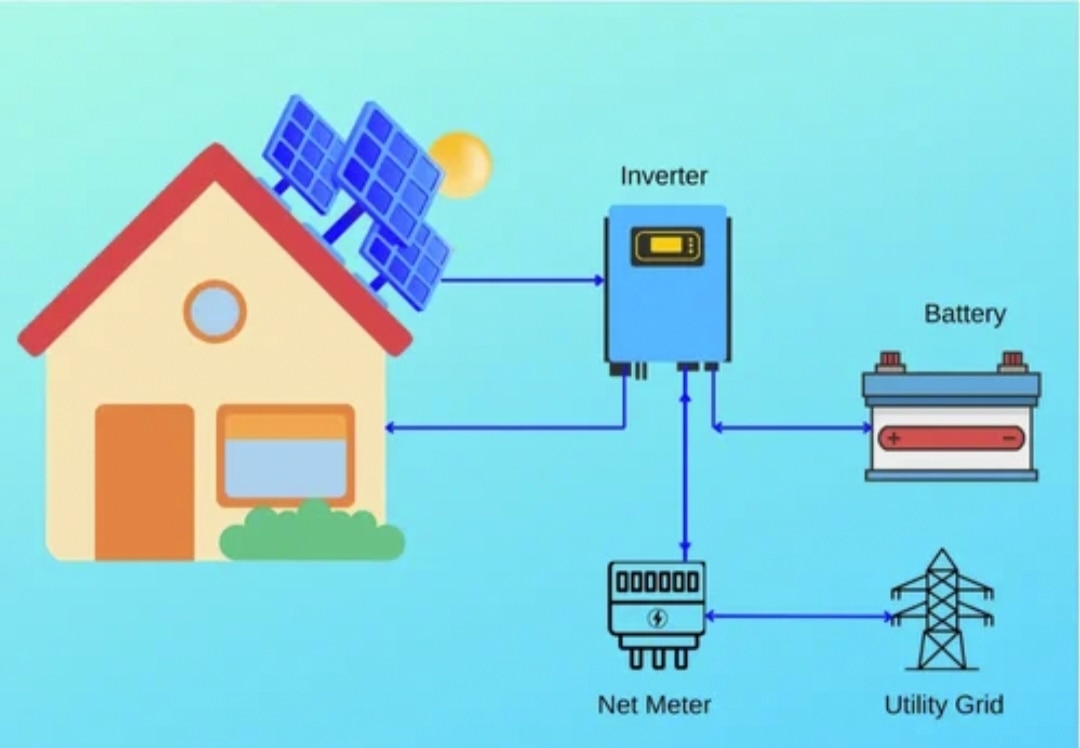 | On-Grid Solar System Installation On-Grid Solar System Installation Solsken Energy LLP offers professional On-Grid Solar System Installation services for residential, commercial, and industrial properties, helping... |
Keywords