An on-grid system that stops generating, trips repeatedly, or shows falling output is not automatically suffering from defective panels. You will be able to separate a panel fault from an inverter, wiring, protection, meter, weather, or grid problem and know what evidence to collect before authorising a repair.
Key takeaways
- Check JVVNL supply, inverter display, AC isolator, and DC isolator first.
- Compare inverter readings with portal data before blaming the panels.
- Inspect dust, bird droppings, shading, loose cables, and water damage after storms.
- Choose professional repair when faults persist or electrical safety is uncertain.
What should you check first when an on-grid system stops producing?
Zero generation does not immediately mean failed panels. First decide whether the building has lost JVVNL supply, the inverter has stopped because of a fault, or the entire system is shut down.
1. Check utility power: test a light or socket and confirm whether the building’s distribution board has supply. During a JVVNL outage, an ordinary grid-tied inverter stops through anti-islanding protection. This protects utility workers but provides no backup electricity; batteries, a compatible hybrid inverter, and essential-load circuits are required.
2. Read the inverter screen without opening it. Record the exact error code, time, weather, and whether grid power is available. “Grid absent” during a power cut is a normal response, not defective solar panels.
3. Inspect only accessible breaker and isolator positions. Check whether the inverter’s AC breaker, DC isolator, or distribution-board breaker is visibly in the OFF or tripped position. Do not open covers or touch DC connectors.
4. Watch for repeated restarts. A tripped breaker, zero generation in full sun, or repeated shutdowns after reconnection needs testing. Stop and arrange professional inspection for insulation, surge, or overvoltage alarms; repeatedly resetting them can hide dangerous earthing, wiring, or protection faults.
These steps separate ordinary power-cut behaviour from solar panel problems on grid system in jaipur. They also prevent unsafe guesses on an on grid solar system in jaipur, where the inverter, AC supply, DC circuit, or utility feeder—not the panels—may be responsible.
How can you tell whether the fault is in the panels, inverter, wiring, or grid?
Test the circuit before blaming the modules: a low-yield reading does not prove that the panels have failed.
| Fault or clue | Check before replacing modules | What the result indicates |
|---|---|---|
| Low daytime output | Compare daily yield with clear-day records; compare string current; inspect shading and soiling | One weak string points to shade, dirt, a fuse, connector, or module fault |
| Inverter trips | Read the event log and measure AC voltage at the inverter | High grid voltage, frequency excursions, voltage rise on a long undersized AC cable, or a weak feeder can disconnect a healthy array |
| Zero output | Check AC isolator, DC isolator, and distribution-board breaker positions | A tripped isolator or breaker interrupts generation without a panel failure |
| One missing string | Measure open-circuit voltage and string current; inspect the string fuse | A blown fuse, reversed polarity, or open circuit identifies the affected circuit |
| Intermittent faults | Check connector type, polarity, cable condition, and terminal torque | Loose or mixed-brand DC connectors, damaged cable, or heat-discoloured terminals create resistance and shutdowns |
| Repeated insulation alarms | Perform insulation-resistance testing and inspect cable routes, earthing, and bonding | Water ingress, cable damage, incomplete earthing, or insulation breakdown needs electrical repair |
| Hot or mismatched modules | Use IV-curve tracing and infrared thermography | A curve defect or hot spot supports module-level diagnosis |
| No export or abnormal bills | Check the net meter, communications, and utility supply | Meter commissioning, communication, or grid faults can mimic poor system performance |
A proper solar panel repair in Jaipur starts with these measurements and photographs, not washing or module replacement. A clean panel cannot correct an inverter, cable, isolator, net-meter, or grid fault. Ask for recorded readings before approving work.
Which Jaipur weather and rooftop conditions reduce output or damage equipment?
Reduced output is seasonal when Jaipur’s heat lowers module efficiency; it is environmental when dust, bird droppings, construction residue, shade, or monsoon water blocks sunlight. A genuine fault remains after the roof is clean and unobstructed, or appears as repeated inverter trips, abnormal string readings, or equipment damage.
| Condition | What it means | When it applies |
|---|---|---|
| Heat | Power falls about 0.3%–0.5% per °C above 25°C cell temperature | Strong sun with a hot roof |
| Soiling or water | Light is blocked; uneven deposits can cause mismatch and hot spots | Dust, droppings, residue, or standing monsoon water |
| Shade | A shaded cell or module can reduce a series string through its bypass-diode layout | Parapets, tanks, antennas, trees, or new buildings |
| Fault | Cleaning and shade removal do not restore expected output | Repeated trips or abnormal electrical readings |
Compare production before and after cleaning, then inspect glass, frames, cable routes, mounting points, and roof drains. Use safe access, soft non-abrasive tools, and controlled water flow. Never use abrasive brushes, high-pressure spray, untreated hard water, or your feet on modules; do not spray cold water onto hot glass.
Clean when measured soiling reduces yield, not on an automatic monthly schedule.
Also check for leakage caused by blocked drains, unsealed penetrations, water-retaining cable routes, or supports placed where they obstruct drainage. A solar panel in Jaipur needs a seasonal shade and drainage inspection after nearby construction or monsoon work.
How should you read monitoring data and identify installation-related problems?
A single low-yield day proves little. Compare today’s daily yield with several previous clear days at similar sun angles, then check each string or MPPT separately. Record cloud cover, dust, and high roof temperature; heat lowers output without proving a fault.
| Record clue | More likely explanation | What to check |
|---|---|---|
| Clear-day yield down across all MPPTs | Heat, seasonal sun angle, grid limitation, or system fault | Inverter log, AC voltage, and historical data |
| One string or MPPT down | Connector, fuse, cable, shade, or module-string fault | String current, polarity, connectors, and insulation |
| Drop begins after construction | New parapet, tank, antenna, or tree shade | Hour-by-hour shade pattern and site photographs |
| Repeated surge or insulation alarms | Earthing, bonding, SPD, or insulation failure | Qualified inspection; do not keep resetting |
Installation defects include undersized AC or DC cables, poor connector crimping, mixed or mechanically tensioned connectors, incomplete protective earthing and bonding, missing or badly selected AC or DC surge-protection devices, inadequate inverter ventilation, weak roof mounting, poor shade-free spacing, and supports that block roof drainage.
These faults cause heating, arcing, trips, water leakage, or structural movement.
A proper handover should include:
- Single-line diagram; module and inverter datasheets; serial numbers; warranty papers; commissioning readings; insulation and earthing results; protection settings; monitoring credentials; and the maintenance schedule.
When is professional repair or a different system decision justified?
Approve solar panel repair in jaipur only after the technician reviews the inverter event log and performs electrical tests, not after panel washing alone. Request a written fault finding that includes measured AC voltage, string-current and voltage readings, insulation-resistance results, photographs, the failed-part diagnosis, and the proposed repair warranty.
Ask any solar installer in jaipur to provide these records before work begins:
- The inverter model, age, warranty status, spare-parts availability, and expected response time.
- The test evidence supporting a panel, connector, cable, inverter, or protection-device diagnosis.
- The single-line diagram, serial numbers, commissioning readings, earthing results, protection settings, monitoring credentials, and maintenance schedule. SOLSKEN ENERGY LLP should be judged by the same handover evidence as any other provider.
Modules commonly carry 25–30-year performance warranties, but string inverters often need major repair or replacement after about 8–15 years. Heat, poor ventilation, heavy loading, and product quality affect that life, so compare the following before choosing:
| Option | What to compare | When it applies |
|---|---|---|
| Repair | Failed part, warranty, test evidence | Localised fault with available spares |
| Replacement | Inverter warranty, cost, response time | Repeated trips or end-of-life inverter |
| Upgrade | Capacity, backup, tariff, future loads | New demand or need for batteries |
Before sizing an on grid solar system in jaipur, confirm current Rajasthan DISCOM rules for sanctioned load, approved capacity, bidirectional-meter commissioning, export settlement, and charges. If daytime use is low, shift pumps, cooling, water heating, or commercial equipment into solar hours before adding panels.
Related products
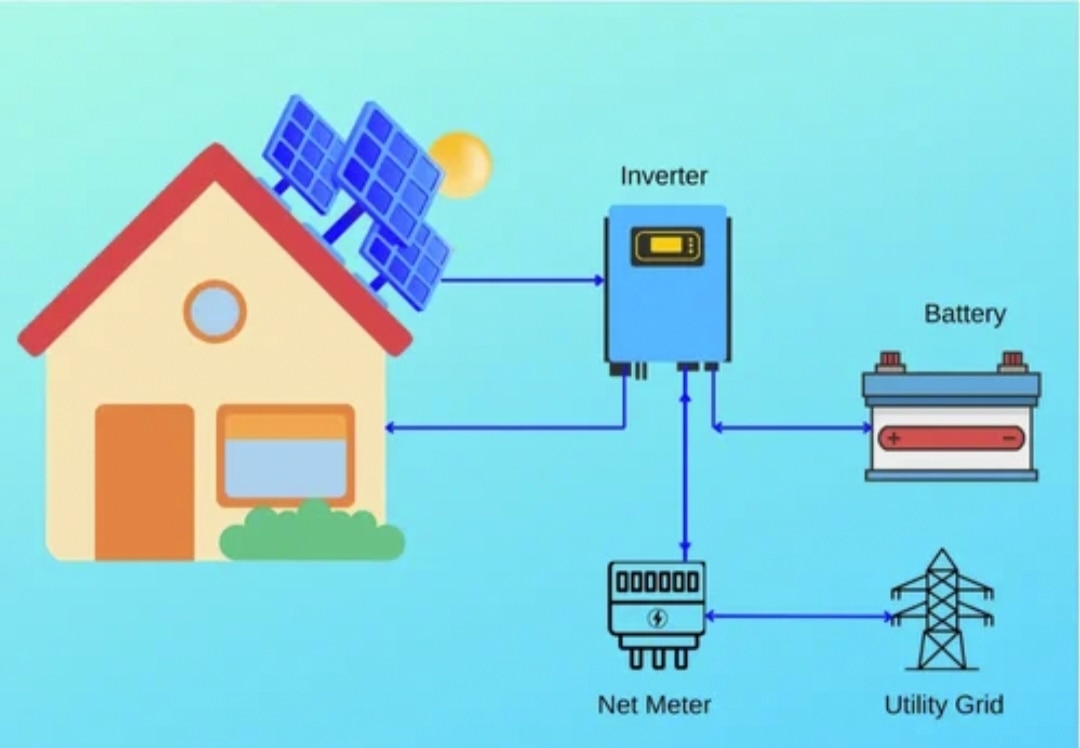 | On-Grid Solar System Installation On-Grid Solar System Installation Solsken Energy LLP offers professional On-Grid Solar System Installation services for residential, commercial, and industrial properties, helping... |
 | Solar Panel Maintenance (AMC) Solar Panel Maintenance (AMC) At Solsken Energy LLP, we offer comprehensive Solar Panel Maintenance (AMC) services to keep your solar power system operating at maximum efficiency... |
Frequently asked questions
What should you check first when an on-grid system stops producing?
Check whether JVVNL supply is available, then inspect the inverter display, AC isolator, DC isolator, and fault indicators. Do not open the inverter or touch exposed wiring.
How can you tell whether the fault is in the panels, inverter, wiring, or grid?
Grid outages usually affect the inverter's AC status, while inverter faults show alarms or error codes. DC voltage, string readings, connector condition, and monitoring data help isolate panel and wiring faults.
Which Jaipur weather and rooftop conditions reduce solar output?
Dust, bird droppings, hard-water residue, nearby shade, high heat, monsoon moisture, loose mounting hardware, and storm debris can reduce output or damage equipment.
How should you read solar monitoring data?
Compare today's generation with clear-day records, review inverter status and error logs, and check whether one string or the whole system is underperforming. Sudden drops point to faults; gradual seasonal changes can reflect heat, dust, or shading.
When is professional repair or a different system decision justified?
Call a qualified solar professional for repeated inverter faults, insulation alarms, damaged cables, water ingress, unexplained string imbalance, or rooftop electrical work. Consider backup storage or a hybrid system when grid outages make an on-grid-only system unsuitable.
Related product
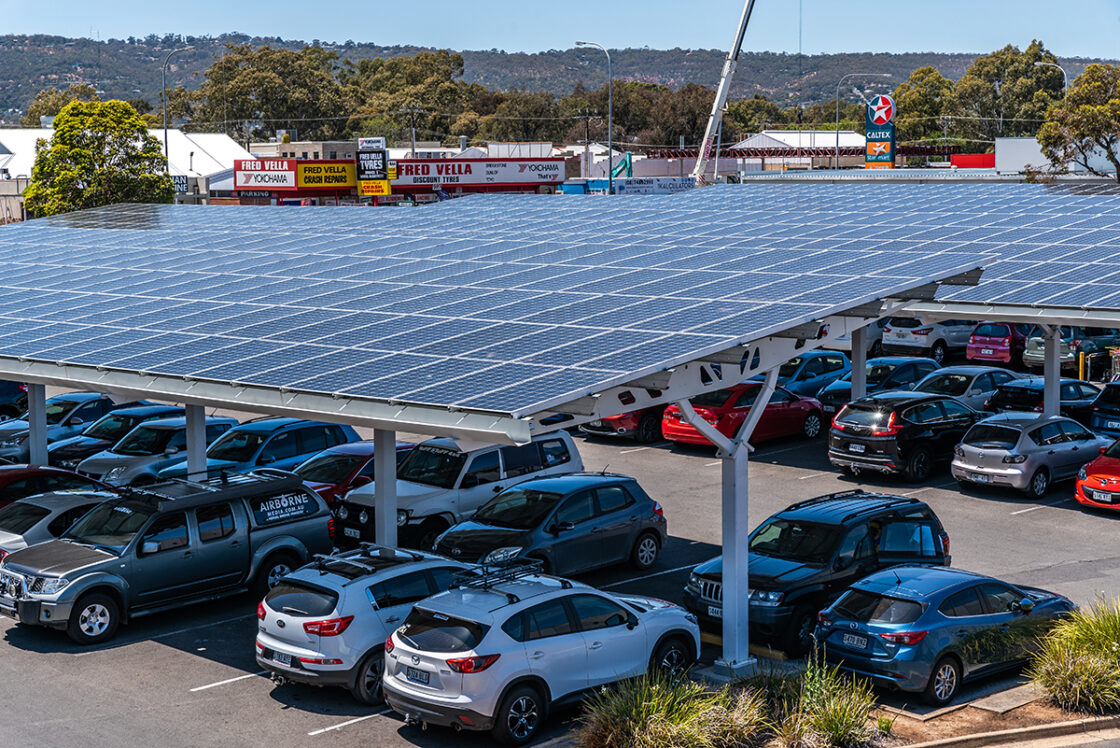 | Car Parking Solar Installation Car Parking Solar Installation Solsken Energy LLP offers innovative Car Parking Solar Installation solutions that transform parking spaces into efficient clean energy generators. |
Keywords