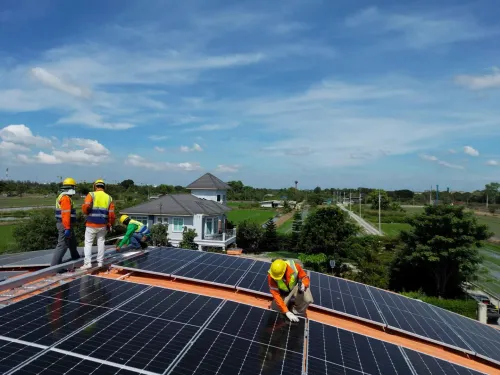
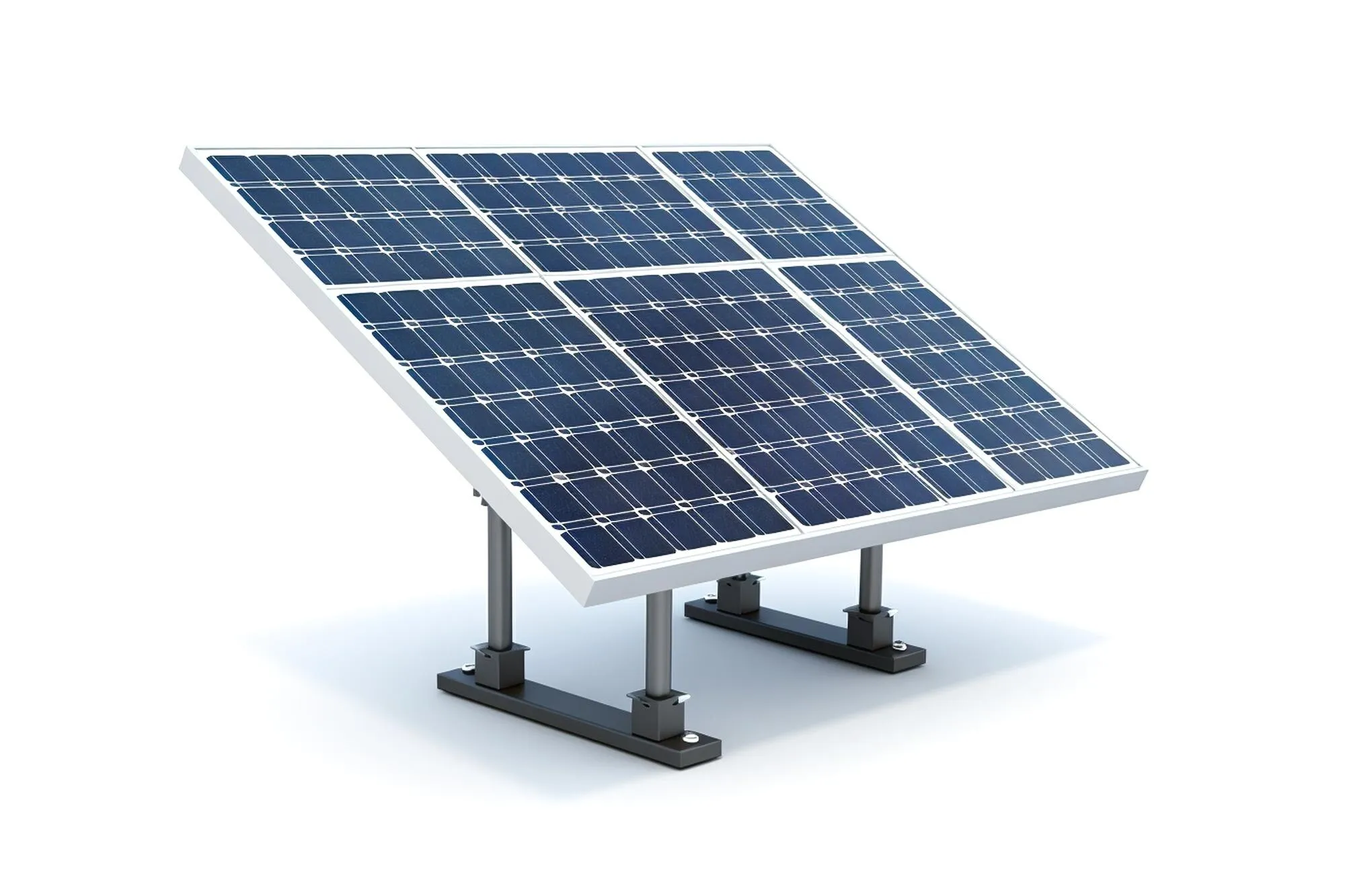
A Jaipur buyer must separate three decisions that are frequently bundled together: whether the rooftop system qualifies for central subsidy, whether JVVNL approves its grid connection, and how exported electricity will appear on the bill. By the end, you will be able to estimate the subsidy, follow the approval sequence, check the required documents, and compare a quotation without treating installation completion as permission to export power.
Key takeaways
- Subsidy is based on eligible capacity, not panel count or quotation value.
- PM Surya Ghar support reaches up to ₹78,000 for eligible residential systems.
- Complete portal approval, installation, inspection and bank verification before payment.
- Net-metered bills separately show imported electricity, exported solar and the net charge.
Who qualifies for the Jaipur rooftop solar subsidy, and how much is it?
An eligible Jaipur household with a residential grid-connected electricity connection can claim the PM Surya Ghar: Muft Bijli Yojana subsidy. The solar subsidy in Jaipur is calculated from eligible installed capacity, not panel count, annual savings or the quotation total.
- Claim ₹30,000 for the first 1 kW.
- Add ₹30,000 for the second 1 kW.
- Add ₹18,000 for the third 1 kW.
- Stop at ₹78,000; installing more than 3 kW does not increase the central subsidy.
A 2 kW system therefore carries a maximum central subsidy of ₹60,000, while a 3 kW or larger system carries ₹78,000.
| Applicant or system | Central residential subsidy |
|---|---|
| Residential grid-connected system, 1 kW | ₹30,000 |
| Residential grid-connected system, 2 kW | ₹60,000 |
| Residential grid-connected system, 3 kW or more | ₹78,000 maximum |
| Commercial, industrial, off-grid or other non-residential system | No PM Surya Ghar residential subsidy |
For the rooftop solar subsidy in Jaipur, register on the national PM Surya Ghar portal, select a registered vendor, obtain the DISCOM feasibility approval, and use scheme-compliant equipment, including applicable domestic-content-compliant modules. Installation, inspection, net-meter commissioning and accepted documentation must follow.
Approval is not payment. The subsidy reaches your bank account only after commissioning and submission of correct bank details, such as a cancelled cheque or passbook copy. Check the quotation separately for sanctioned capacity, system price and subsidy amount. A rented property also needs valid electricity-account eligibility and roof-owner permission.
What must a Jaipur household do before the subsidy reaches its bank account?
The subsidy is credited only after the PM Surya Ghar: Muft Bijli Yojana process reaches commissioning; it is not an automatic discount on your quotation. The scheme applies to an eligible residential electricity connection and a compliant grid-connected rooftop system, not to commercial, industrial, off-grid or panel-only purchases.
- Register on the national PM Surya Ghar portal using your mobile number, electricity consumer account number and JVVNL details. Keep your latest electricity bill, identity and address proof, and roof-ownership papers or written owner permission ready.
- Select a registered vendor shown on the portal. Confirm that the proposed modules meet the applicable domestic-content requirement and that the vendor and product details are accepted before paying or signing.
- Submit the application for JVVNL feasibility approval. JVVNL, not the installer alone, decides whether the connection and local network can support the proposed system and processes the agreement or related approvals.
- Install the approved system through the selected vendor. Keep installation photographs, the invoice, equipment details and completion records; changes from the approved capacity can delay the claim.
- Arrange JVVNL inspection, meter-related work and commissioning. Net-metering approval remains separate from physical installation, so do not treat installed panels as permission to operate in parallel with the grid.
- After commissioning, upload or verify your bank account details and submit the cancelled cheque or passbook copy requested on the portal. JVVNL’s completion records then support subsidy release to that account.
For solar panel subsidy net metering in jaipur, check every portal status until the payment is credited, not merely marked approved.
How does net metering in Jaipur turn solar generation into bill credits?
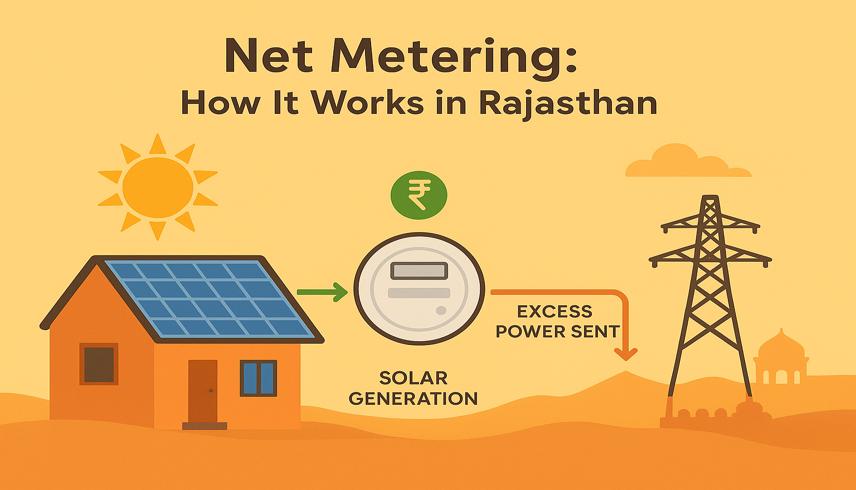
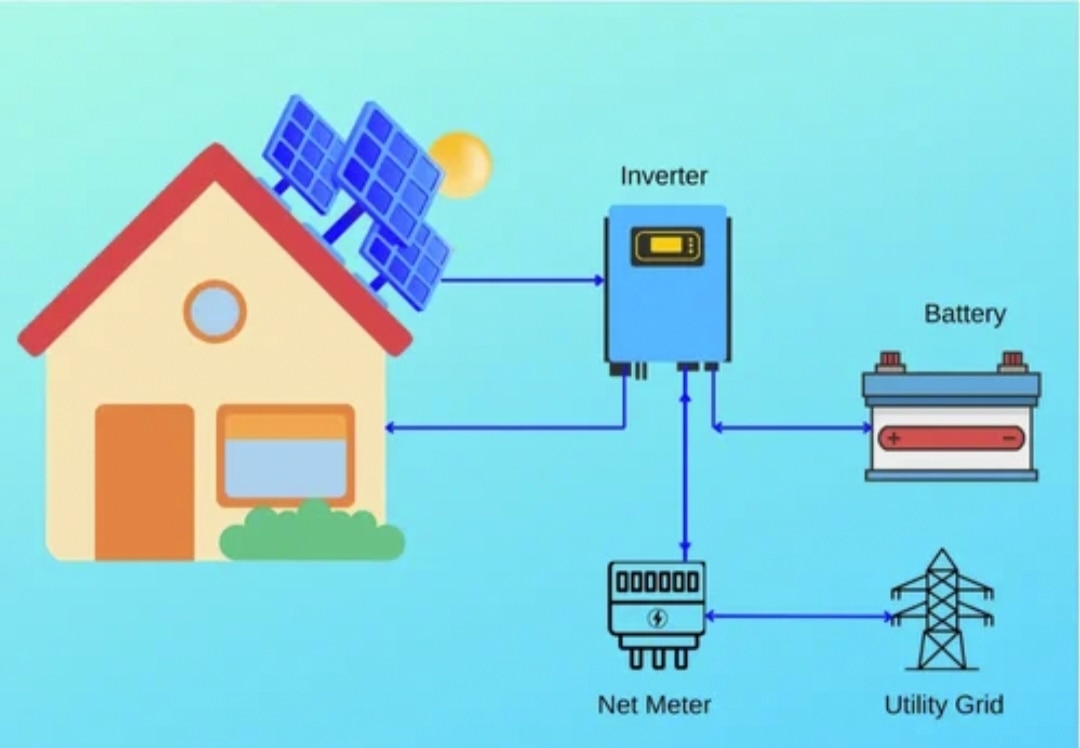
A grid-connected rooftop system sends surplus electricity to the JVVNL network and draws power from the grid when solar output is insufficient. You do not need a battery for this arrangement, but the system cannot export power until JVVNL approves the connection and completes metering.
The practical sequence has three parties:
1. You provide the consumer account number, electricity bill, roof access and required applications, then pay the agreed installation charges.
2. The registered vendor designs and installs the system, submits technical details, provides safety documents and supports inspection and commissioning.
3. Jaipur Vidyut Vitran Nigam Limited (JVVNL) assesses feasibility, approves the connection, inspects the installation, installs or authorises the bidirectional meter and grants permission to operate in parallel with the grid.
The meter records two readings: imported units, which your property takes from JVVNL, and exported units, which solar sends to the grid. Each monthly bill applies the permitted net-metering settlement: export credits reduce the value or units of your imports, while remaining energy charges, fixed charges, taxes and other applicable amounts stay payable.
A home that uses electricity during the day receives more immediate self-consumption than one that exports most generation and imports heavily at night.
That is how net metering in jaipur turns generation into bill credits; installing panels alone does not create that credit.
During a grid outage, a normal grid-tied inverter shuts down to prevent dangerous backfeed onto lines being repaired. Keep essential loads running only with separately approved backup or hybrid equipment containing anti-islanding protection.
How should you read a Jaipur net-metered electricity bill and estimate savings?
Start with the bill’s meter-reading section, not the final amount. The bidirectional meter records imported electricity in kWh, taken from the grid, and exported electricity in kWh, sent to the grid. The bill then applies eligible export credits under the applicable JVVNL and RERC settlement rules.
1. Match the present and previous readings with the “import” or “energy consumed” units. These are your night-time and high-load purchases from the grid.
2. Find “export,” “solar export,” “adjustment,” “banking,” or “net energy” entries. Exported daytime units reduce eligible imported units; they do not normally become cash paid to you.
3. Read the non-energy lines separately. Fixed charges, sanctioned-load charges, demand charges for applicable connections, electricity duty, taxes, meter charges and other levies can remain payable even when net energy is zero.
4. Use the “current charges,” “arrears,” credits and “total amount payable” lines to identify what you must pay by the due date. Do not subtract the export reading again if the bill has already applied it.
Estimate savings by comparing several pre-solar bills with the post-solar energy charge, then subtracting continuing charges. A solar panel in Jaipur rated at 1 kW will not produce 1 kW continuously: daytime use raises self-consumption, while night-heavy use leaves you importing more.
Shading, dust, module tilt, inverter clipping and summer heat reduce generation; clean and inspect the system when output falls, rather than treating the nominal rating as a guarantee.
What should a Jaipur buyer check in a solar quotation before signing?
Compare quotations line by line, because the cheapest solar panel in Jaipur may exclude the meter, commissioning work or required domestic-content modules.
1. Check the sanctioned capacity in kilowatts, not just the panel count. The quotation must show the eligible PM Surya Ghar subsidy separately, followed by the customer payment after subsidy. Confirm that the subsidy applies to your residential grid-connected connection; commercial and industrial systems do not receive this central residential subsidy.
2. Ask whether the modules meet the scheme’s domestic-content requirement. Require the module make, model, wattage, serial numbers and supporting invoice or compliance evidence. A “Made in India” label alone does not prove eligibility.
3. Match module wattage to the total system size, then compare the inverter’s AC rating with the sanctioned capacity. Ask what clipping occurs at peak sunlight and whether the inverter includes approved anti-islanding protection.
4. Demand a generation estimate based on your roof’s direction, tilt, shading, dust losses, heat and past bills. A 1 kW rating is not continuous 1 kW output. Ask for monthly units, not only an annual headline figure.
5. Read the warranty terms: module product and performance warranties, inverter warranty, workmanship coverage, exclusions and the service response process. Also confirm who obtains roof-owner permission if you rent or share the property.
6. Put JVVNL responsibilities in writing. Ask whether the price includes feasibility processing, bidirectional meter charges or installation, inspection, agreement and commissioning. Installation is not permission to export power.
Ask SOLSKEN ENERGY LLP for a written document checklist, each excluded charge and the expected approval handoffs before signing. This makes solar panel subsidy and net metering in Jaipur easier to compare.
Related products
 | Solar Subsidy & Net Metering Assistance Solar Subsidy & Net Metering Assistance We simplify the process of government subsidy applications and net metering approvals. |
 | On-Grid Solar System Installation On-Grid Solar System Installation Solsken Energy LLP offers professional On-Grid Solar System Installation services for residential, commercial, and industrial properties, helping... |
Frequently asked questions
Who qualifies for the rooftop solar subsidy in Jaipur?
A Jaipur household needs an eligible residential grid-connected electricity connection and must apply through the PM Surya Ghar: Muft Bijli Yojana process. The subsidy is calculated from eligible installed capacity, not the number of panels or the quotation total.
How much is the solar subsidy in Jaipur?
Under the central PM Surya Ghar structure, eligible residential systems receive ₹30,000 per kW for the first 2 kW and ₹18,000 for the next 1 kW, with the central subsidy capped at ₹78,000 for systems of 3 kW or more. Confirm the current amount and any Rajasthan-specific support on the official application portal before signing.
What must a Jaipur household do before receiving the subsidy?
Apply through the PM Surya Ghar portal, use an approved installer, complete installation, submit the required documents, pass the distribution company inspection and metering steps, and finish bank-account verification. Payment follows successful approval rather than the quotation date.
How does net metering work in Jaipur?
A bidirectional meter records electricity imported from the grid and surplus solar electricity exported to the grid. The bill applies the distribution company's billing rules and tariff to those recorded units, so exported energy reduces the billed consumption rather than creating unlimited cash income.
How should you check a Jaipur solar quotation?
Confirm the system's DC capacity, panel and inverter models, mounting structure, protection devices, cable sizes, warranty terms, approvals, installation scope, net-metering assistance, taxes, payment milestones and what happens if inspection or commissioning fails.
Related product
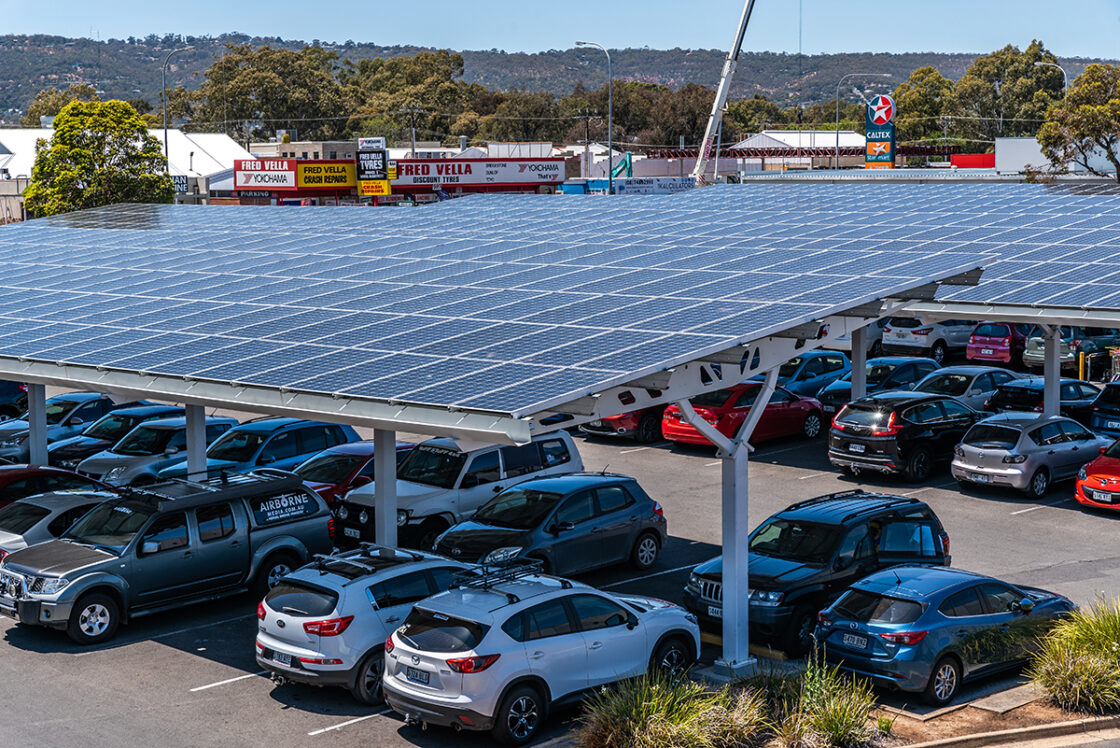 | Car Parking Solar Installation Car Parking Solar Installation Solsken Energy LLP offers innovative Car Parking Solar Installation solutions that transform parking spaces into efficient clean energy generators. |
Keywords