A quotation that says “complete rooftop solar system” can still leave out protection devices, approvals, testing, roof work, or maintenance. You will be able to compare the equipment, survey work, approvals, cost boundaries, and handover documents before accepting a proposal.
Key takeaways
- Demand module models, wattage, warranties, cables, connectors, structure, and generation meter.
- Confirm the solar site survey records roof area, shading, orientation, access, and electrical loads.
- Ask who files net-metering, subsidy, and utility-approval documents before signing.
- Require handover documents covering warranties, test results, drawings, and system operation.
What equipment should a rooftop solar quotation include?
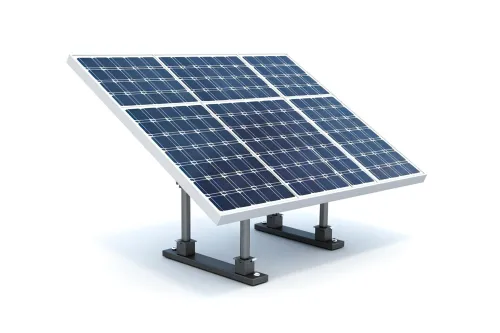
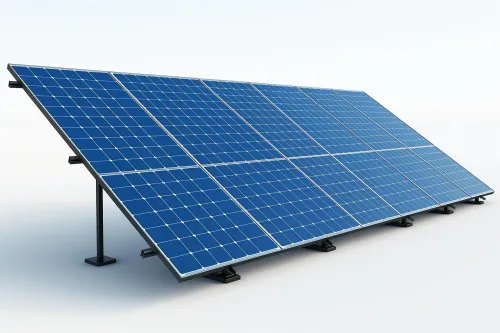
A quotation for rooftop solar installation in Jaipur should name every item, not hide omissions behind “complete solar system.” Ask for solar modules with model, wattage, efficiency, product warranty, and performance warranty; an aluminium or galvanised-steel mounting structure; DC solar cables; MC4 connectors; and a generation meter.
The equipment schedule should also specify:
- DCDB with isolator and surge protection
- ACDB with isolator, surge protection, and suitable breakers
- Grid-tied inverter with model, capacity, protections, and warranty
- Earthing for the module structure and electrical equipment
- Lightning protection where the design requires it
- Monitoring gateway or inverter portal
- Danger, shutdown, string, and equipment labels
- Commissioning records and test results
A basic grid-connected inverter shuts down when utility power fails to prevent unintentional islanding. If you need outage power, require batteries, a hybrid inverter, essential-load changeover equipment, and the additional wiring in the price; these do not belong automatically in a standard package.
Before accepting a solar company’s offer, request a single-line diagram, roof layout, equipment schedule, cable sizes, earthing arrangement, applicable Indian or IEC compliance information, estimated generation, and an itemised price. The quotation must also identify monitoring access, warranty contacts, utility-process responsibilities, and exclusions.
Without these documents, you cannot tell whether installation, protection, or commissioning has actually been included.
What happens during a solar site survey and installation?
A solar installer should begin with your actual electricity use, not a panel count. The consultation records monthly consumption, sanctioned load, tariff category, outage concerns, export goals, and any battery or backup requirement. Provide recent bills, consumer number, roof ownership or permission, structural drawings when available, and identity or property documents needed for applications.
A satellite image or electricity bill alone is not a solar site survey. The team must inspect the roof and electrical system in person.
1. During the solar site survey, the team measures roof length, width, usable area, orientation, existing tilt, and parapet height. It records shade from water tanks, lift rooms, trees, and nearby buildings, including winter-morning and afternoon shadows.
2. The survey checks roof condition, drainage, waterproofing risks, mounting points, access routes, lifting space, cable routes, inverter location, meter position, distribution-board location, earthing points, and the existing service connection.
3. A structural check considers mounting loads and wind forces. The quotation must state whether roof repairs, waterproofing, reinforcement, or non-penetrating mounting are included; otherwise, treat them as separate scope items.
4. The installer prepares the system design, shadow analysis, roof layout, and quotation before procurement. The proposal should identify capacity, equipment, cable routes, and expected generation.
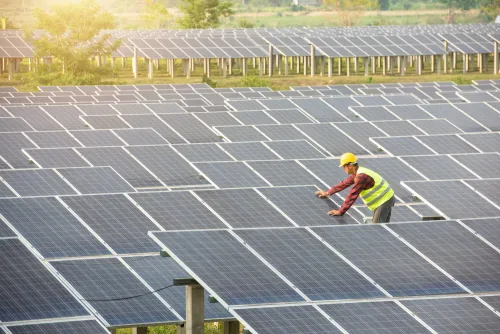
5. After procurement, the crew installs the structure, modules, protection equipment, cables, inverter, earthing, and labels.
6. Testing covers polarity, insulation, earthing, protections, monitoring, and generation. Commissioning follows utility requirements.
7. Handover includes test records, drawings, monitoring access, warranties, operating instructions, and maintenance contacts.
How is the system size and roof layout decided in Jaipur?
Do not fill every usable roof area with panels: size the system around consumption, electrical limits, roof conditions, and your energy objective.
- Monthly units and annual electricity consumption
- Sanctioned load and available service capacity
- Usable, shadow-free roof area
- Inverter input and output limits
- Desired export to the grid
- Backup loads such as lights, fans, or refrigeration
The proposal must state estimated annual generation and its assumptions. It should account for dust and bird fouling, high summer temperatures, inverter and cable losses, shading, and grid downtime. Multiplying panel capacity by 24 hours and 365 days is not a valid estimate.
| Array direction | Main advantage | Limitation |
|---|---|---|
| South-facing | Often stronger annual production | May not match the highest-demand hours |
| East-facing | Produces more during morning demand | Lower late-afternoon output |
| West-facing | Matches afternoon demand | Lower morning output; heat exposure can rise |
An east- or west-facing design can also fit a divided roof better. Tilt must balance Jaipur’s latitude with roof space, wind exposure, parapet shading, cleaning access, and monsoon drainage; no single angle suits every rooftop solar installation in Jaipur.
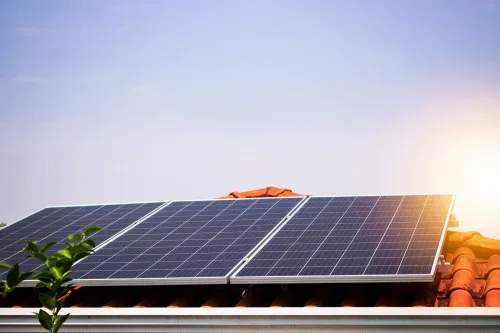
The roof plan should show row spacing, walkways, water-tank clearance, drainage paths, and areas likely to collect dust. Require the proposal to identify whether it uses a raised structure, ballast, or roof penetrations, and specify flashing, sealing, and waterproofing controls that prevent leakage.
Who handles net metering, subsidy paperwork, and utility approval?
Installing panels does not authorize exported electricity. A solar company offering rooftop solar installation in Jaipur can prepare the application, but the responsible distribution licensee must approve the connection, inspect it where required, install or process the bidirectional meter, and synchronize the system.
For most Jaipur connections, ask whether that licensee is Jaipur Vidyut Vitran Nigam Limited (JVVNL).
Ask the quotation to state whether it includes:
- Net-metering application and discom coordination
- Document submission and inspection attendance
- Bidirectional meter installation and service-connection processing
- Synchronization after approval and subsidy paperwork
- Government or utility charges that remain payable by you
- The assumed tariff, export-credit method, and treatment of surplus generation
| Item | What to confirm | Why it matters |
|---|---|---|
| Approval | Licensee approval before export | Unapproved exports are not authorized |
| Credit | Rajasthan rule, tariff, and connection category | One exported unit may not equal one consumed unit |
| Subsidy | PM Surya Ghar: ₹30,000/kW for the first 2 kW; ₹18,000/kW from 2–3 kW; maximum ₹78,000 at 3 kW or more | This is residential assistance, not a general entitlement for every commercial or industrial system |
Prepare recent electricity bills, consumer number, sanctioned load, roof ownership or permission, structural drawings when available, identity documents, and required property documents. Confirm who obtains each document and who pays each charge in writing. A complete solar company quote separates installation from approval rather than hiding both under “turnkey” scope.
What must the quotation, warranty, and handover scope say?
Before signing, require a quotation that defines the entire solar company rooftop solar installation for inclusions in Jaipur, not merely “complete system.” It should attach:
- Roof layout, single-line diagram, proposed capacity, annual generation estimate, equipment schedule, itemised price, approval responsibilities, commissioning tests, monitoring access, warranty contacts, maintenance terms, and written exclusions.
- Separate written answers on roof waterproofing, structural reinforcement, meter relocation, long cable runs, trenching, extra distribution-board work, scaffolding, old-system removal, and roof repairs. Do not assume any of these are included.
- Handover records showing test results, inverter settings, meter details, monitoring login, manuals, warranty documents, and emergency contacts.
Compare warranty language carefully:
| Warranty | Covers | Does not automatically cover |
|---|---|---|
| Module product warranty | Defects in materials or manufacture | Roof leakage or installation damage |
| Module performance warranty | Declared power output over time | Inverter failure or lost revenue |
| Inverter warranty | Inverter faults under stated terms | Module defects or cable damage |
| Installer workmanship warranty | Installation defects, including covered mounting work | Every roof repair or future maintenance visit |
Maintenance is a separate scope. Ask whether the solar installer cleans dust and bird fouling, whether water and access equipment are included, and whether service is one-time or annual. Require inverter-alarm checks, production-data review, connector and cable inspection, mounting-hardware and corrosion checks, earthing and protection checks, and inspection for new shade.
Evaluate SOLSKEN ENERGY LLP by this same checklist: a credible quotation defines every item, responsibility, test, warranty contact, and exclusion.
Related product
 | Rooftop Solar Installation Rooftop Solar Installation Solsken Energy LLP provides reliable and efficient Rooftop Solar Installation services for residential, commercial, and industrial properties. |
Frequently asked questions
What equipment should a rooftop solar quotation include?
It should identify the solar modules by model, wattage, efficiency, product warranty, and performance warranty. It should also list the mounting structure, DC solar cables, MC4 connectors, inverter, protection equipment, and generation meter.
What happens during a solar site survey and installation?
The solar installer checks the roof structure, usable area, shading, orientation, access, cable routes, and the existing electrical system. The installation then covers mounting, module placement, wiring, inverter connection, testing, and handover.
How is the system size and roof layout decided in Jaipur?
The design uses your electricity consumption, available roof area, shading, roof orientation, structural condition, and the utility connection. The layout should show module locations, access paths, equipment positions, cable routes, and clearances.
Who handles net metering, subsidy paperwork, and utility approval?
The quotation must name the party responsible for each submission, inspection, meter change, subsidy document, and utility approval. Ask for a document checklist, expected customer actions, and confirmation of completion.
What must the quotation, warranty, and handover scope say?
The documents should state every included and excluded item, equipment models, installation work, warranty periods, maintenance duties, payment milestones, commissioning tests, and handover records.
Keywords