Jaipur’s heat, rooftop dust and direct afternoon sun can push an inverter into thermal derating or an avoidable shutdown just when electricity demand rises. By following a timed inspection, safe cleaning routine and data-based fault check, you can identify what needs a technician before peak heat rather than repeatedly resetting a tripped system.
Key takeaways
- Book inspection four to six weeks before Jaipur’s hottest period.
- Never open the inverter or test live wiring as a homeowner.
- Use inverter logs to distinguish heat derating from wiring and battery faults.
- Choose an AMC covering cleaning, thermal checks, testing and emergency response.
Book the pre-summer inspection before the heat peak
Arrange solar inverter maintenance for before summer in jaipur four to six weeks before Jaipur’s hottest period, preferably in March or early April. Booking early leaves time to repair a failed fan, improve mounting protection or resolve a wiring fault before high ambient temperatures trigger derating or shutdowns.
Ask the technician to inspect these conditions:
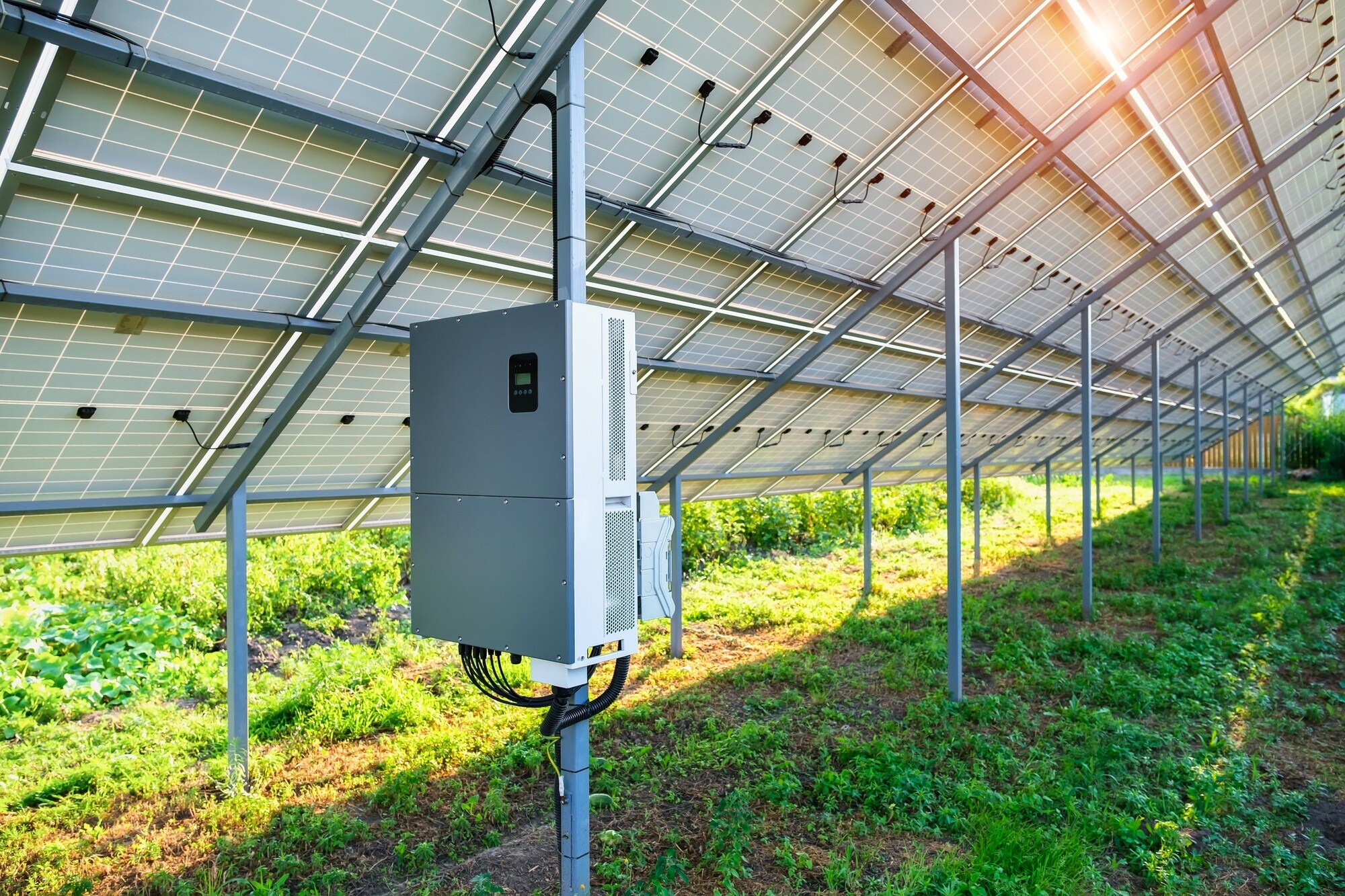
- Airflow: Confirm the manufacturer’s clearance around the inverter, and remove dust, storage items, nests or other obstructions near vents, fans and heat sinks.
- Heat exposure: Check direct afternoon sun and the wall’s ability to shed heat. Use only engineered shade; a cloth cover or sealed box can trap heat.
- Dust and weather: Check dust entry, monsoon water splash, pests, cabinet seals and nearby wall contamination.
- Electrical protection: Test AC and DC isolators, cable terminals, earthing, surge protection and battery connections where fitted.
- Performance: Review warning lights, error history, fan noise, thermal derating, repeated grid trips and communication records.
External cleaning must follow the manufacturer’s method. Do not open an energized inverter or spray water into it. Solar inverter maintenance in jaipur should also record panel condition separately: washing can recover output lost to dust, but it cannot fix grid-voltage trips, cooling failure, loose terminals or insulation faults.
Use this safe homeowner checklist before calling for service
You can inspect the system’s condition without opening the solar inverter, removing covers, or touching photovoltaic wiring. Stay on the ground unless the roof has safe, compliant access, and stop if you see damaged equipment.
1. Read the inverter display or monitoring app. Record warning lights, error codes, recent shutdowns, daily yield and unexplained changes from previous months.
2. Look at the enclosure from outside. Check for heavy dust, blocked air openings, water marks, cracks, scorching, insect nests and unusual fan noise. Do not insert tools into vents.
3. Check clearance around the inverter. Remove stored boxes, cloth, leaves and other objects that restrict airflow, but do not move the inverter or its cables.
4. Inspect visible cable routes, conduits and isolator housings without touching them. Look for cuts, sagging, melted plastic, loose covers or exposed conductors. Never disconnect a DC connector; daylight can leave PV strings energised and create a dangerous arc.
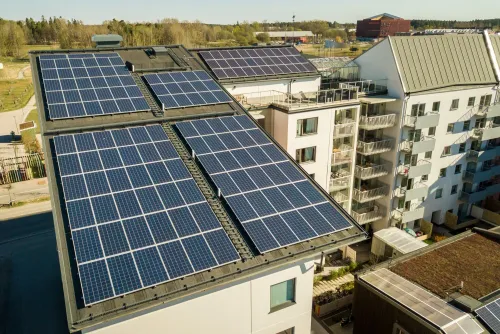
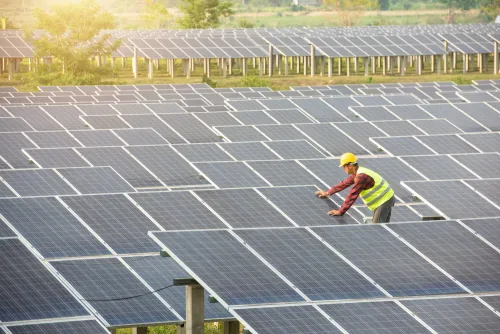
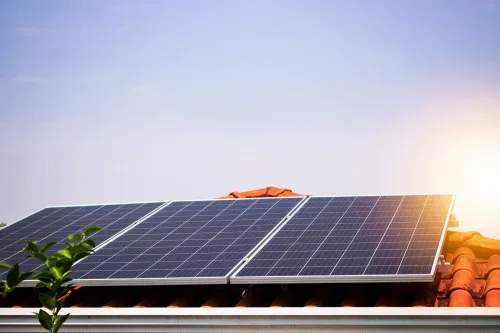
5. From a safe position, inspect panels for dust, bird droppings, leaves, cracked glass, delamination, loose frames or damaged cables. Do not climb onto panels.
6. If a battery is installed, check only for swelling, leakage, corrosion, heat or an alarm on its external casing.
Call a qualified technician for any abnormal finding. Shutdown, electrical measurements and internal cleaning require the manufacturer’s procedure and correctly rated isolation equipment.
Leave electrical, thermal and battery testing to a qualified technician
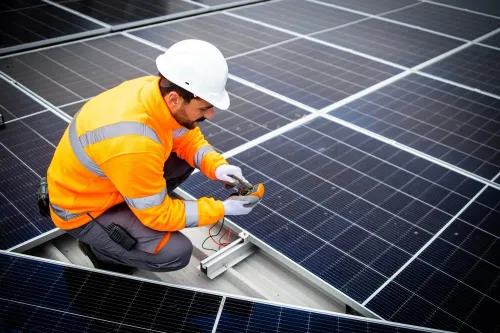
Tests involving live or potentially live circuits require a qualified technician with correctly rated AC and DC isolation equipment. A visual check cannot prove that a solar inverter is electrically safe, and a photovoltaic string can remain energised in daylight.
The technician should follow the inverter manufacturer’s shutdown sequence and verify isolation before testing. Never unplug DC connectors under load: the resulting DC arc can cause burns, fire or equipment damage.
- Review the inverter event log, warning lights and operating temperatures, then compare thermal-derating events with the manufacturer’s derating curve.
- Measure AC and DC voltage and current, and verify string polarity.
- Test insulation resistance where the system design and equipment permit it.
- Inspect earthing, surge-protection devices, AC and DC isolators, cable terminals and battery connections.
- Use thermal imaging on accessible connections under load to find loose or overheating joints.
| Test or task | Why it matters | Required competence or equipment |
|---|---|---|
| Internal fan, heat-sink and air-inlet cleaning | Dust and fan failure trap heat and trigger output reduction | Trained technician; approved tools and isolation procedure |
| Insulation, polarity and voltage tests | Faults can remain invisible during a visual inspection | Qualified technician; rated meter and test leads |
| Thermal imaging | Finds hot connections before they fail | Technician trained in interpreting thermal images |
| Battery checks | Loose terminals, abnormal voltage or heat can create fire risk | Technician; battery-rated isolation and test equipment |
Do not open the inverter or spray water into it while energised. A technician should also check whether direct afternoon sun, dust entry or blocked airflow requires engineered shade or relocation.
Read the inverter data and separate heat problems from other faults
For solar inverter maintenance in Jaipur, record the fault code, trip time, DC voltage, AC voltage, frequency and inverter temperature before resetting the system. Compare the readings with the fault history: a pattern that appears during hot afternoons points to thermal stress, while a fault tied to grid changes or one panel string points elsewhere.
| Cause | What the data usually shows | What to check next |
|---|---|---|
| Overheating | Temperature warning, output derating or shutdown after long hot operation; fan alarm or rising cabinet temperature | Ventilation clearance, dust inside cooling paths and fan operation |
| Panels or string | Low or uneven DC voltage, reduced power without a high-temperature code; fault follows one string | Soiling, shading, cracked modules and string performance |
| Wiring or insulation | Insulation-resistance, ground-fault or arc-fault alarm; abrupt DC readings or intermittent trips | Connectors, cable damage, loose terminals and moisture entry |
| Grid | AC over-voltage, under-voltage or frequency code; trips match utility fluctuations or outages | AC voltage, frequency, isolator and grid supply |
| Battery | Battery undervoltage, over-temperature or communication alarm on hybrid systems | Battery terminals, state of charge, temperature sensor and battery management system |
Dusty panels usually cause gradual yield loss, not an inverter fault. Do not keep switching the system on after repeated trips; preserve the log and have a qualified technician test the cause.
Clean panels without creating a heat or electrical hazard
Dusty panels reduce solar generation gradually; they do not fix grid-voltage trips, failed cooling fans or inverter wiring faults. Solar panel maintenance supports inverter performance by keeping the array’s expected output from falling and making genuine inverter derating easier to identify.
Inspect the array before cleaning, then arrange cleaning when soiling is visible or output remains low for the weather:
- Check for dust, bird droppings, leaves, cracked glass, delamination, loose frames and damaged cables from ground level.
- Clean during a cool early morning or evening, after the glass has cooled.
- Use clean water and a soft, non-abrasive brush or sponge. Jaipur’s hard-water marks may need a final rinse with low-mineral water.
- Avoid pressure washers, abrasive pads, metal tools and harsh detergents.
- Keep water away from the inverter, isolators, cable connectors and junction boxes.
Do not climb onto a hot or wet roof, spray panels during peak sun, or handle photovoltaic connectors. Switching off the inverter does not make sunlit panels electrically dead. Stop if glass is cracked or cables are exposed, and use a qualified technician for roof access or defects.
Record the cleaning date and any output change; washing cannot correct blocked inverter vents, loose terminals, insulation faults, firmware problems or grid interruptions.
Choose an AMC scope that covers the risks you actually have
Require a written AMC scope that matches your site’s risks, not a promise of “regular maintenance.” Before Jaipur’s hottest weeks, ask solar amc services to specify:
- Visit frequency and a response time for over-temperature trips, repeated shutdowns and communication failures.
- Monitoring and alarm-history review, with a service report separating panel soiling, inverter faults, grid trips and battery faults.
- Cleaning responsibility for panels, inverter air inlets, fans, heat sinks and the surrounding wall.
- Electrical and thermal testing, safety procedures, warranty coordination, and clear labour and spare-parts exclusions.
- Battery inspection if your system stores energy.
| Scope item | Require in writing | Risk if omitted |
|---|---|---|
| Cooling | Fan, heat-sink and ventilation inspection | Derating or shutdown in dusty heat |
| Electrical | AC/DC connections, insulation, earthing and surge protection checks | Loose terminals or faults remain hidden |
| Battery | Battery terminals, temperature and backup testing | Shorter life or failed backup |
For solar inverter maintenance in jaipur, a local provider is useful when it can reach your property quickly, understands rooftop dust and afternoon heat, and stocks or sources compatible parts.
SOLSKEN ENERGY LLP can be assessed by the same test: demand a site-specific scope and sample service report before signing, rather than choosing an AMC on location alone.
Related product
 | Solar Panel Maintenance (AMC) Solar Panel Maintenance (AMC) At Solsken Energy LLP, we offer comprehensive Solar Panel Maintenance (AMC) services to keep your solar power system operating at maximum efficiency... |
Frequently asked questions
When should you book solar inverter maintenance before Jaipur summer?
Book the inspection four to six weeks before the hottest period, preferably in March or early April. This leaves time to repair fans, mounting protection or wiring faults before heat causes derating or shutdowns.
What can a homeowner safely check before requesting solar inverter service?
Check for error codes, unusual sounds, blocked ventilation, visible cable damage, loose conduit, water entry and heavy dust. Do not remove covers, touch terminals or test live electrical parts.
Which solar inverter tests require a qualified technician?
A qualified technician should perform electrical measurements, insulation and earthing checks, thermal inspection, battery testing and internal fan or connection checks.
How can inverter data help identify a summer fault?
Review error codes, shutdown times, temperature readings, daily production and grid-voltage records. Output that falls during high heat points toward derating, while recurring voltage, insulation or battery alarms indicate different faults.
What should solar panel maintenance include before summer?
Remove dust with suitable equipment, inspect panels and cables, check drainage and mounting points, and avoid cleaning during peak heat or when surfaces and electrical connections are wet.
Keywords